PETA Calls on Crystal Palace to Ground Its Eagle
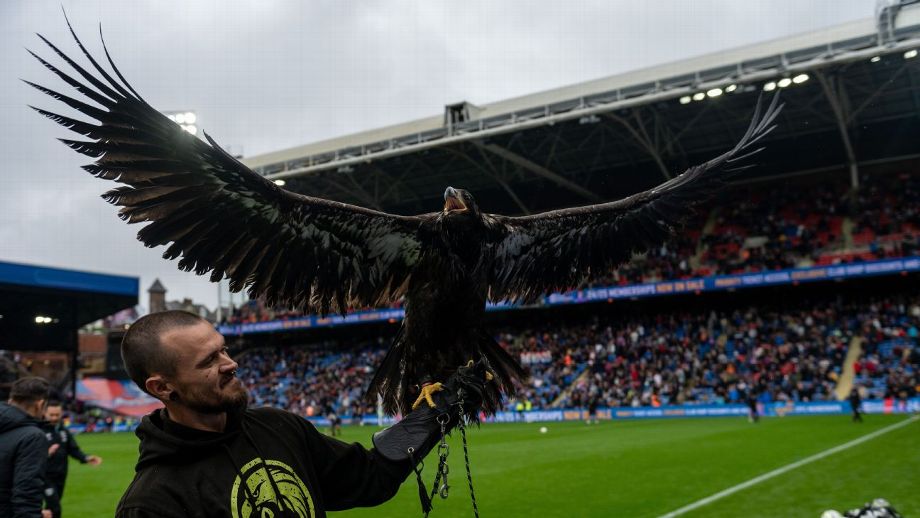
On October 20, 2026, the animal rights group PETA (People for the Ethical Treatment of Animals) urged Crystal Palace's CEO to end the club's matchday ritual of flying its eagle mascot, Phoenix, with immediate effect.
Palace, nicknamed the Eagles since 1973, flies its bald eagle the length of the Selhurst Park pitch before home games. As is typical of such complaints, PETA argues that the stadium's booming environment, with bright lights, loud noise and boisterous crowds, can leave birds frightened, disoriented and panicked. The group also cites incidents at other stadiums: an owl that died after being hit by a ball, eagles that crashed into walls or glass windows, and a falcon that landed on a fan's head and sank its talons into his scalp.
Crystal Palace is not the only club with an eagle as its mascot. Several other famous European clubs share the symbol, and some have flown live birds of their own.
Other eagle clubs
Lazio
Like Crystal Palace, Italian club S.S. Lazio had a pre-match ritual of flying its mascot, Olimpia, over the stadium. The eagle on Lazio's crest pays homage to the military standards of the ancient Roman legions, and it was chosen as the club emblem in 1900 by founding member Luigi Bigiarelli. Olimpia, a female American bald eagle, was introduced in September 2010, and for nearly 15 years her flight was a spectacle for supporters. In 2025, after her falconer posted an inappropriate image on social media, the club sacked him and ended the tradition.
Eintracht Frankfurt
The eagle (Adler) is both the centrepiece of Eintracht Frankfurt's crest and a living mascot: a golden eagle named Attila. The emblem comes from the city of Frankfurt's historic coat of arms, which traces back to the 13th-century Imperial Eagle, and the club is widely known as "Die Adler" (The Eagles). Born on April 30, 2004, Attila has been the club's live matchday symbol since the 2006/07 season and has been cared for by falconer Norbert Lawitschka ever since. He brings luck not only to Eintracht but also to his owner.
"Previously I could only go to the stadium if my wife let me, but now I have to go to every home game."
Benfica
Benfica's live mascot is a North American bald eagle (Haliaeetus leucocephalus) named Águia Vitória. Before every home match at the Estádio da Luz in Lisbon, she flies in wide circles around the stadium, trailing red and white ribbons, before landing on a perch or on the club crest at the centre of the pitch. The eagle stands for independence, authority and nobility, and sits atop the club's official crest, which gives Benfica its nickname, As Águias ("The Eagles"). The tradition began when the stadium opened on October 25, 2003, and the birds are trained and cared for by handler André Rodrigues.
Conclusion
The clubs and some conservationists argue that these flights build a deep cultural connection to wildlife and raise awareness of conservation. Animal rights groups and welfare advocates counter that they raise serious ethical concerns about how the birds are treated. It remains to be seen how Crystal Palace will respond to PETA's concerns.
What's your take?