Substitution
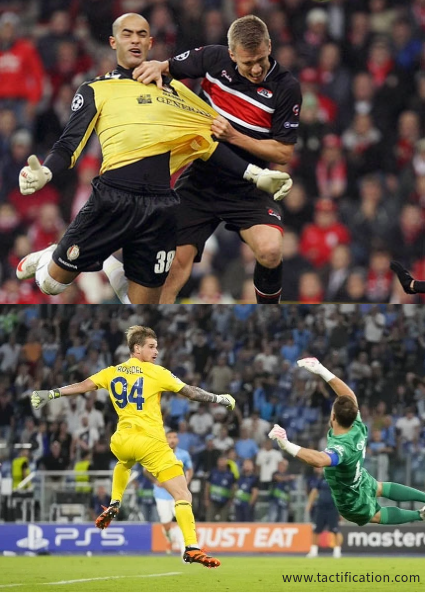
Budget your substitution's in football like money. To remind the quotes significance, two instances flashes on me. In the UEFA Champions League final 2002-03, five minutes into the extra time, Roque Júnior injured his thigh and had to play(or walk?) for AC Milan for the rest of the game because AC Milan ran out of substitutions. Another one is the decision by José Pékerman of Argentina's national team coach to use their last substitution by introducing Cambiasso for Riquelme. Argentina were on the cusp of victory against Germany in the FIFA World Cup 2006 quarter final match. Pekerman's decision proved costly as Germany equalized and taken game to extra time and eventually won game in penalties. It's called as costly because Argentina was unable to use Lionel Messi. Lets go through the history of substitutions in football.
History and Evolution of Substitution
The origin of substitution in football goes back to mid 19th century. Substitutions were used to replace players who failed to turn up for the game. It officially entered into the Laws of the Game in 1958, allowing one substitution per match only for injured players. On 21 August 1965, Keith Peacock of Charlton Athletic became the first player to come in as a substitute in English Football League when he replaced injured goalkeeper Mike Rose against Bolton Wanderers. First substitution in a world cup has happened in 1970. Anatoliy Puzach appeared as a substitute for Soviet Union against Mexico on 31 May 1970. He replaced Viktor Serebryanikov at half-time. Coincidentelly, in same game game also witnessed the first World Cup yellow card.
| Year | Modified Number of Substitutions |
|---|---|
| 1958 | Increased to 1 substitute |
| 1988 | Increased to 2 substitutes (from a possible 5 players) |
| 1994 | 2 substitutes + 1 injured goalkeeper |
| 1995 | Increased to 3 substitutes |
| 2016 | 4th substitute allowed in extra time |
| 2020 | Up to 5 substitutes (+1 in extra time) in Covid days |
| 2022 | 5-substitute rule made permanent |
Substitution opportunities
With the increasing intensity and physical demands of modern football, the substitution rules have evolved significantly over the decades. With the increase in number of substitutions, substitution opportunities are introduced to limit time wasting and disruption of the game. At the time of writing this article, there are only three pauses allowed to make substitutions in a match. Substitutions at halftime break, before the start of extra time and at the halftime of extra time are not counted as one of the three pauses. When substitions were made in same window by both team, it's accounted as an used opportunity for both teams. Multiple players substituted at an opportunity is still counted as one.
Concussion substitute
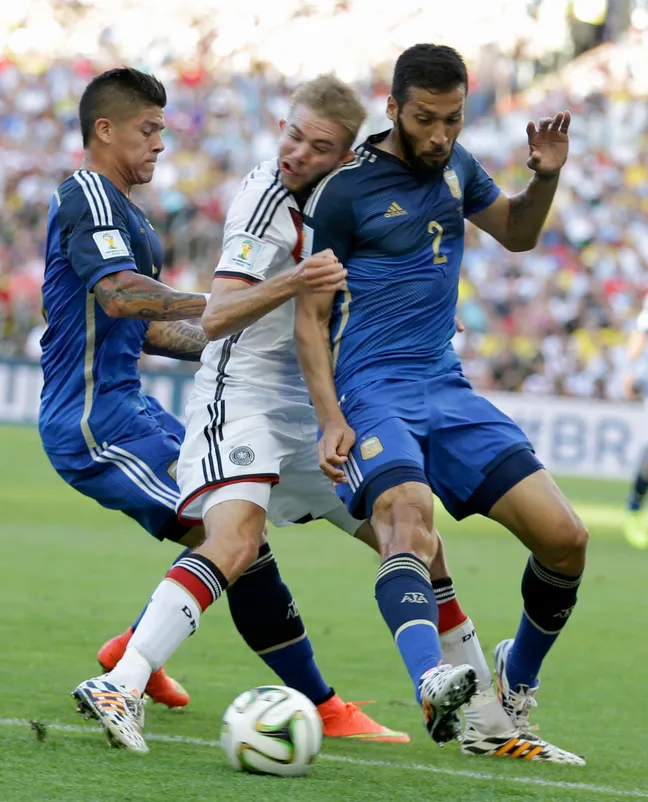
In 2014 FIFA world cup final, Christoph Kramer concussed in a collision with Ezequiel Garay. As per the records from the referee Nicola Rizzoli, after 14 minutes of collision, Kramer came to him and asked if this game is the Final. Rizzoli informed German team about his state and André Schürrle substituted him. This incident raised the concern about concussion in football and led to formal discussions for concussion substitutes. The concussion substitute rule allows a team to make an additional permanent substitution when a player is suspected of having a concussion. It’s designed to prioritize player safety by removing head‑injured players without forcing teams to play short‑handed. The protocol follows an “if in doubt, take them out” approach, reducing pressure on medical staff to make rushed decisions and lowering the risk of repeat head impacts.
A Moment That Stays With You
Which substitution decision, the moment you see the board raised, instantly comes to your mind as history-changing—and why?